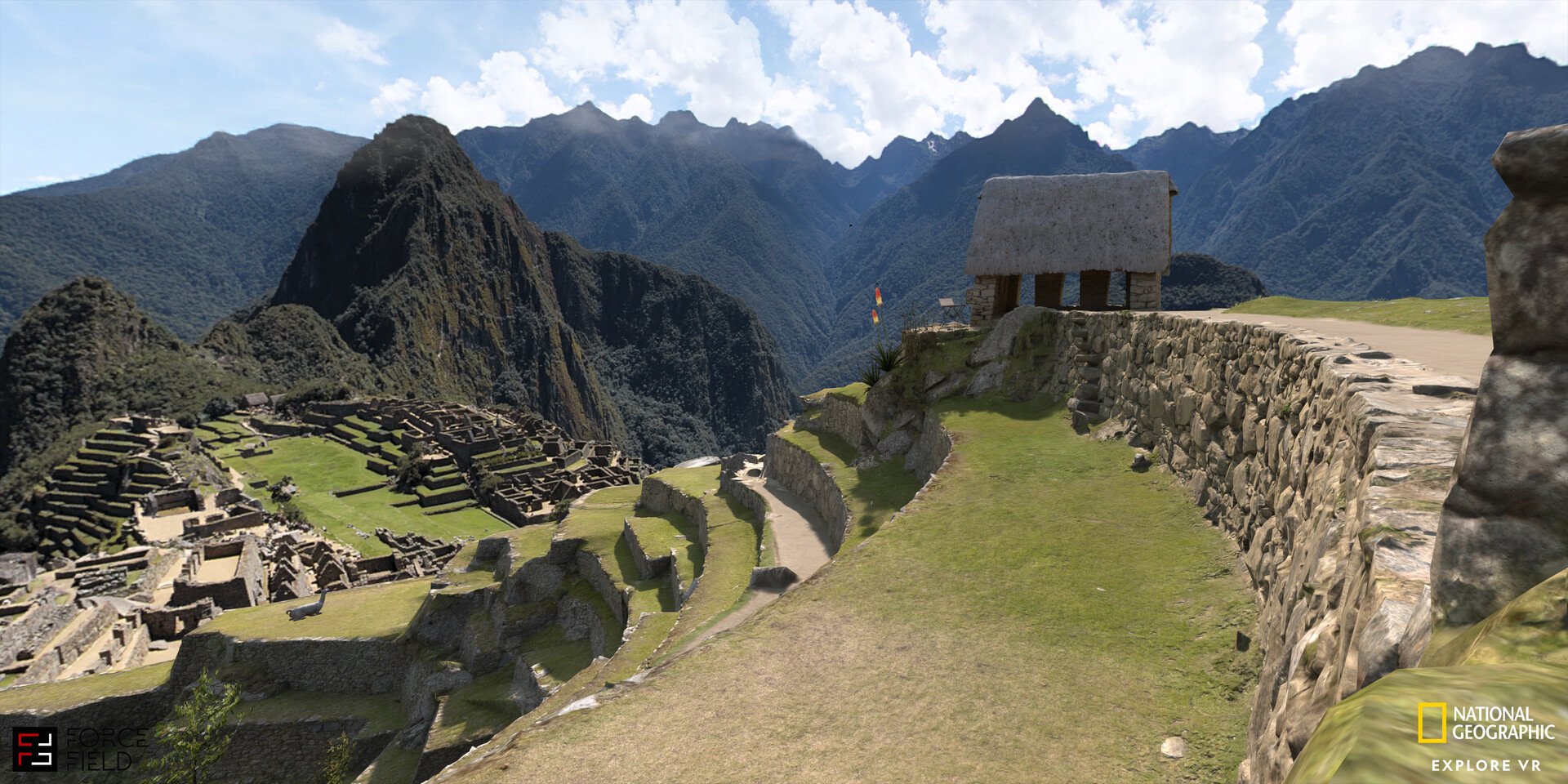
Virtual reality gives destination marketers the possibility of letting someone experience a place before deciding whether to travel there. My bachelor thesis looked at what that actually does to the desire to visit. I wanted to understand how an immersive VR experience could influence the visit intentions of international Gen Z students, and which parts of that experience were responsible for any change.
Five students experienced National Geographic’s Machu Picchu simulation on an Oculus Quest 3 and were interviewed immediately afterwards for around 45 minutes. I analysed the transcripts in ATLAS.ti using deductive thematic analysis, initially looking at three dimensions drawn from the literature on virtual tourism: telepresence, emotional engagement and cognitive engagement.
Across the interviews, immersive VR increased participants’ interest in visiting Machu Picchu. The more revealing finding was how that happened. Participants responded most consistently when they could interact with the place, move through it, notice its sensory details and learn through what they were doing. Their reactions to graphical realism were much less consistent. The experience became less effective when technical friction or too much simultaneous information drew attention away from Machu Picchu and back towards the medium itself.
01From seeing a destination to experiencing it
Presence made the destination feel worth experiencing in person.
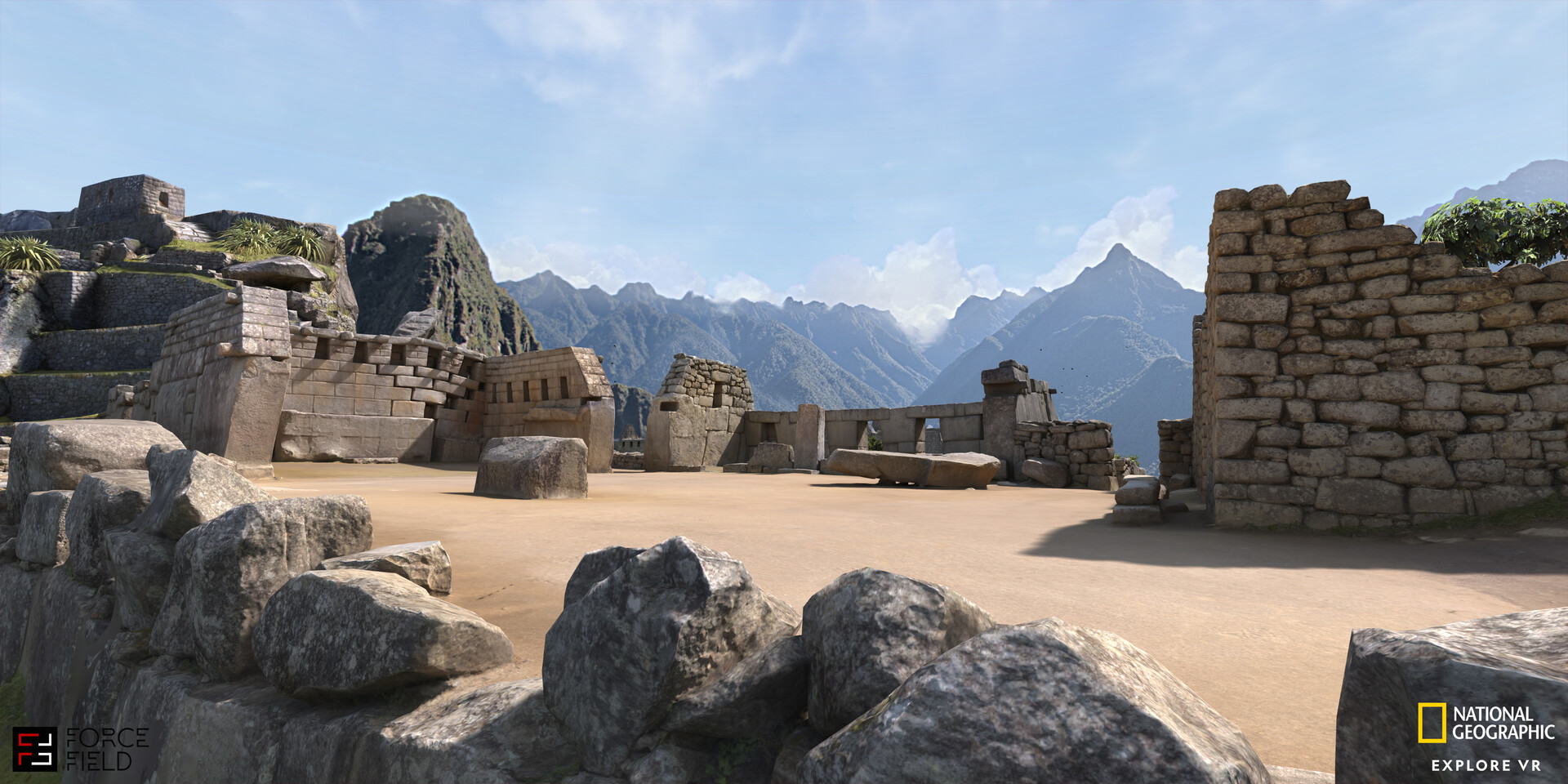
Participants described the VR tour differently from looking at photographs or watching a video because they could orient themselves inside Machu Picchu and explore it from their own point of view. They could move through the ruins, hear birds and wind, look in different directions and interact with objects in the environment. Several described feeling as though they were actually there, and all five said that this greater sense of presence increased their interest in visiting Machu Picchu physically.
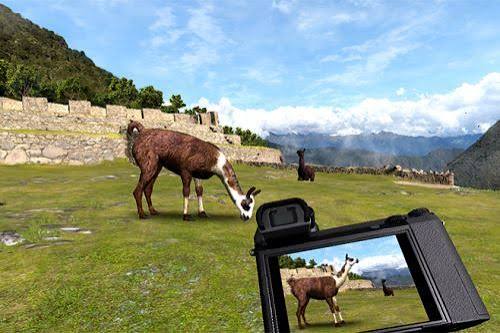
The smaller environmental details contributed to that effect. Natural sound, movement and elements such as the animals around the site helped make Machu Picchu feel like a place rather than a static representation of one. The alpacas were an unexpectedly consistent example. All five participants associated them with an emotional response that made the environment feel more alive and increased their curiosity about experiencing the destination itself.
What VR added was therefore not simply more visual information. It gave participants a partial experience of being somewhere.
 View larger
02Interaction made the difference
Active participation mattered more consistently than graphical realism.
The reactions to the graphics were mixed. One participant thought parts of the environment looked too clean and perfect for an ancient site, while another found the graphics insufficiently realistic. Visual fidelity affected immersion, but participants did not respond to it in the same way.
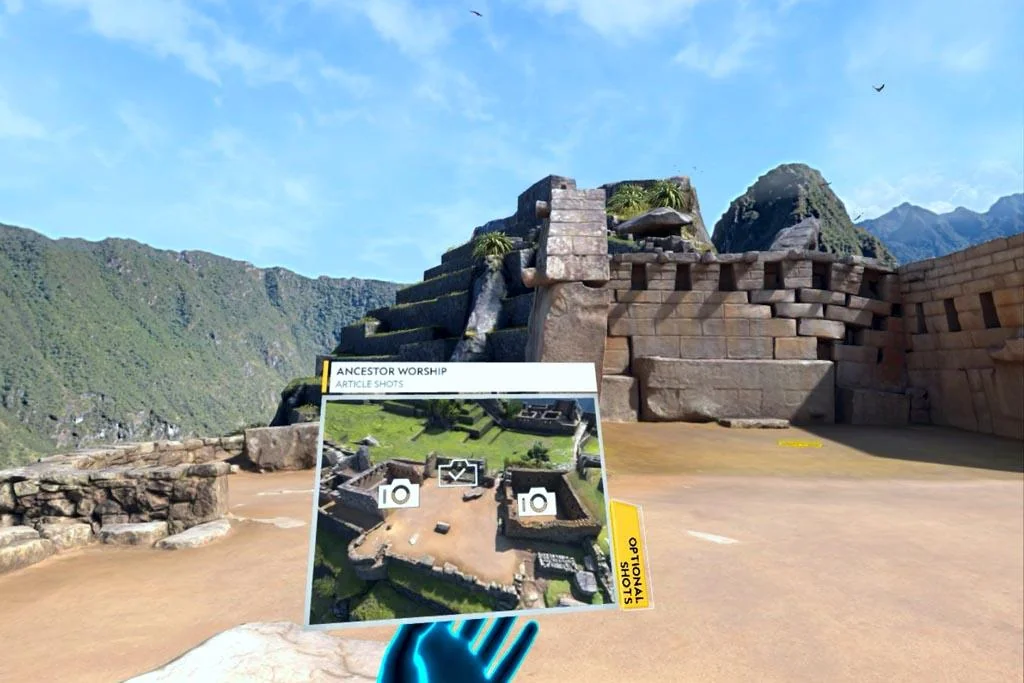
Their response to interactivity was more consistent. The experience asked participants to take photographs, explore artefacts, reconstruct elements of an Incan home and complete tasks as they moved through the site. Across the interviews, these activities were associated with stronger immersion, greater enjoyment and a more convincing sense of being present. Participants repeatedly described the experience becoming more engaging when they were doing something inside Machu Picchu rather than simply looking at it.
Interaction also crossed the three dimensions I had originally separated in the research design. It strengthened telepresence because participants could act inside the environment. It contributed to emotional engagement because exploration made the experience more enjoyable and memorable. It also supported cognitive engagement when historical information was attached to an activity or object rather than delivered separately.
That became one of the clearest findings of the study. The value of immersion did not come from surrounding someone with a more elaborate image of Machu Picchu. It came from giving them a role within it.
 View larger
03Understanding gave the destination more relevance
Context gave participants stronger reasons to consider visiting.
Participants also came away knowing more about Machu Picchu. The simulation introduced its history and cultural significance through a virtual guide and through activities embedded in the environment. All five participants described learning from the experience, and several connected that greater understanding directly to stronger interest in visiting.
One participant explained that knowing more about Machu Picchu gave it greater relevance in her mind and made her more interested in seeing it. Others described VR as a way of getting a first sense of whether they would enjoy the real destination before undertaking a long trip. The experience helped turn Machu Picchu from a familiar image into somewhere they understood more specifically.
Again, interaction mattered. Participants responded positively when information was connected to something they were actively exploring or doing. One described learning while completing tasks as helping the information stick. The experience was therefore doing two things at once. It was allowing participants to encounter the destination and giving them enough context to understand what they were encountering.
 View larger
04Attention was the constraint
Competing demands and technical friction weakened engagement.
Those two functions did not always work comfortably together. Participants sometimes had to navigate the environment, complete an activity, look at the landscape and listen to historical narration at the same time. Several described missing information because their attention was elsewhere. One participant remembered the images and the feeling of being there more clearly than the historical details, despite describing the tour as highly informative.
The problem was not that participants wanted less information. They consistently valued learning about Machu Picchu. The issue was when and how that information was delivered. When narration competed with exploration, participants found it harder to absorb. When information was incorporated into an activity, they found it easier to engage with and remember.
Technical problems created the same competition for attention. Slow response times, awkward controls and navigation difficulties made participants concentrate on using the VR system rather than on Machu Picchu. The result was weaker immersion and, in some cases, less excitement about the experience.
The study therefore pointed to attention as an important constraint. The experience could offer more sensation, more information and more interaction than conventional destination media, but those elements only added value when people could process them without being pulled in several directions at once.
05Designing for involvement rather than spectacle
Design around discovery, then support it with information.
Taken together, the findings suggest that the opportunity for destination VR lies less in reproducing a place with maximum visual fidelity and more in designing how someone encounters it.
For the participants in this study, interaction was the most consistent mechanism connecting the virtual experience with greater interest in the real destination. Activities gave them reasons to look more closely, made historical information part of what they were doing and strengthened the sense that they were exploring rather than observing. Sensory details supported that feeling, while intuitive navigation allowed it to continue without interruption.
That would change how I approached a destination VR experience. I would begin with what the visitor should be able to discover and do, then decide what information helps them understand those moments and where it should appear. Visual quality matters, but it supports the experience rather than defining it.
The aim would be to leave someone thinking more about the place than about the technology used to show it.
06What the study could not establish
Greater immediate interest does not establish subsequent travel behaviour.
The study was designed to explore how participants made sense of the experience rather than quantify its effect across Generation Z. The sample consisted of five students from Erasmus University, and Machu Picchu was a particularly distant and expensive destination for them. Both factors limit how far the findings can be generalised.
It also measured visit intention immediately after the VR experience, not subsequent behaviour. A larger study could compare destinations with different levels of familiarity and accessibility, test the findings quantitatively and follow participants over time to see whether greater interest leads to further search, planning or an eventual visit. That distinction matters because the thesis identified how immersive VR appeared to shape desire, not whether that desire ultimately converted into travel.