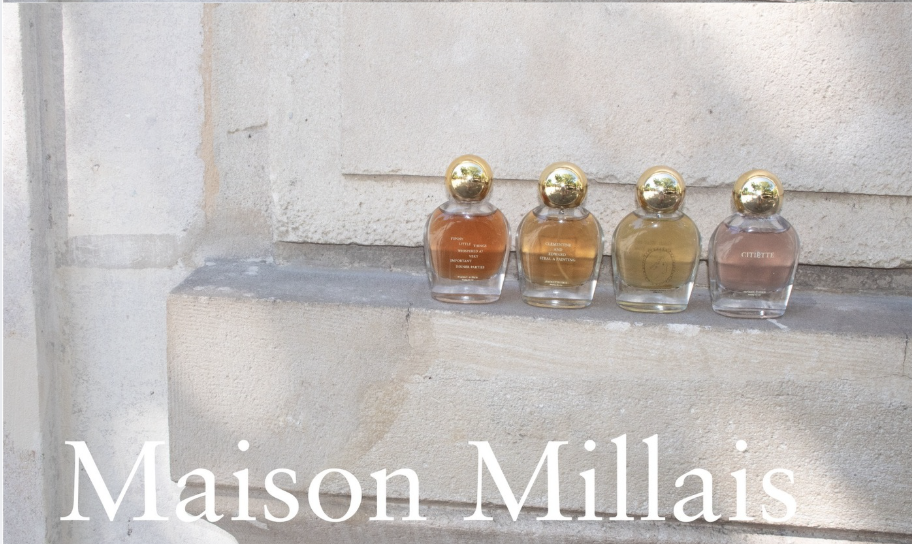
Maison Millais was four months from launching its new fragrance collection in the US. The 50ml eau de parfums would retail at around $150, roughly twice the price point the house had previously sold at.
For a young fragrance brand selling largely online, that created a practical commercial problem. Customers were being asked to spend considerably more on a product they could not smell before buying. At the same time, the house needed to build an audience for launch, make the e-commerce journey work harder, establish credibility at the new price point and prepare further markets without losing the literary and artistic character that made the brand distinctive.
I joined a two-person team in Paris and later New York, working across category research, product architecture, Shopify, paid acquisition, CRM, partnerships, launch planning and international market preparation. The work was interconnected from the start. The benchmark changed how we thought about sampling. Sampling changed the role of the site. The site shaped how we acquired and converted traffic. The brand world shaped the launch. Regulation determined which markets could open next.
01A different route to a $150 bottle
Sampling offered a lower-risk first purchase at the new price.
I started by benchmarking around twenty fragrance and adjacent luxury brands across pricing, distribution, product range, sampling, retail presence and online purchase journeys.
The central question was how established brands reduced the uncertainty of buying fragrance online. At this price point, the strongest examples rarely asked customers to move directly from discovery to a full-size bottle. Discovery sets, samples, travel formats and retail created lower-commitment ways into the brand before the larger purchase.
That gave Maison Millais’ Discovery Kit a clearer commercial role. It could become the first purchase for someone interested in the house but not ready to spend $150 on a fragrance they had never tried. Sampling was no longer an accessory to the range. It became part of the route to conversion.
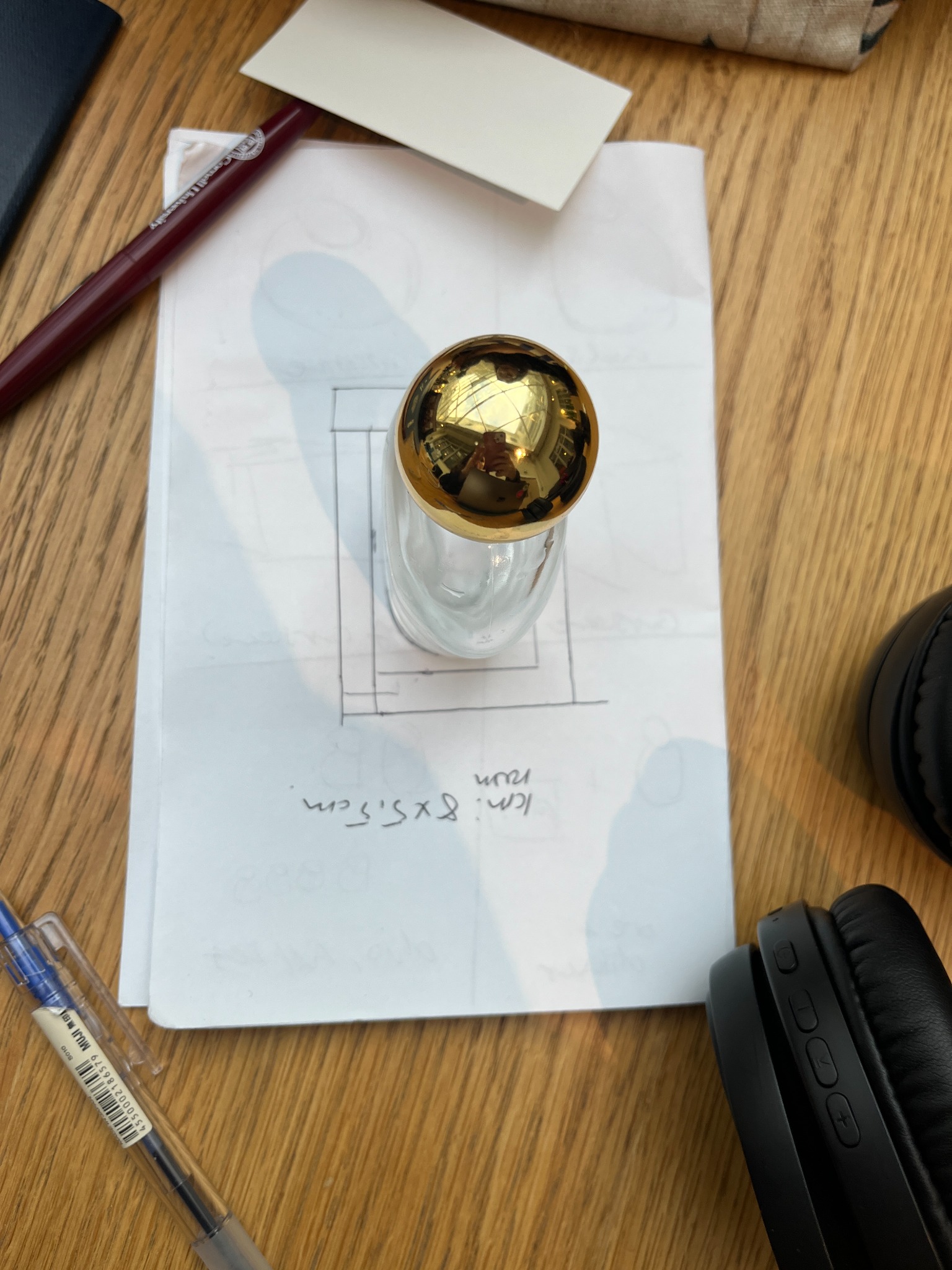
The same benchmark informed feedback on bottles, packaging and launch materials as the new collection was developed. The question throughout was whether the product, presentation and route into the range supported the higher level of commitment the new price required.
 View larger
02Fixing the store before scaling traffic
Fewer purchase steps; sales uplift was not independently tested.
The next issue was the store itself.
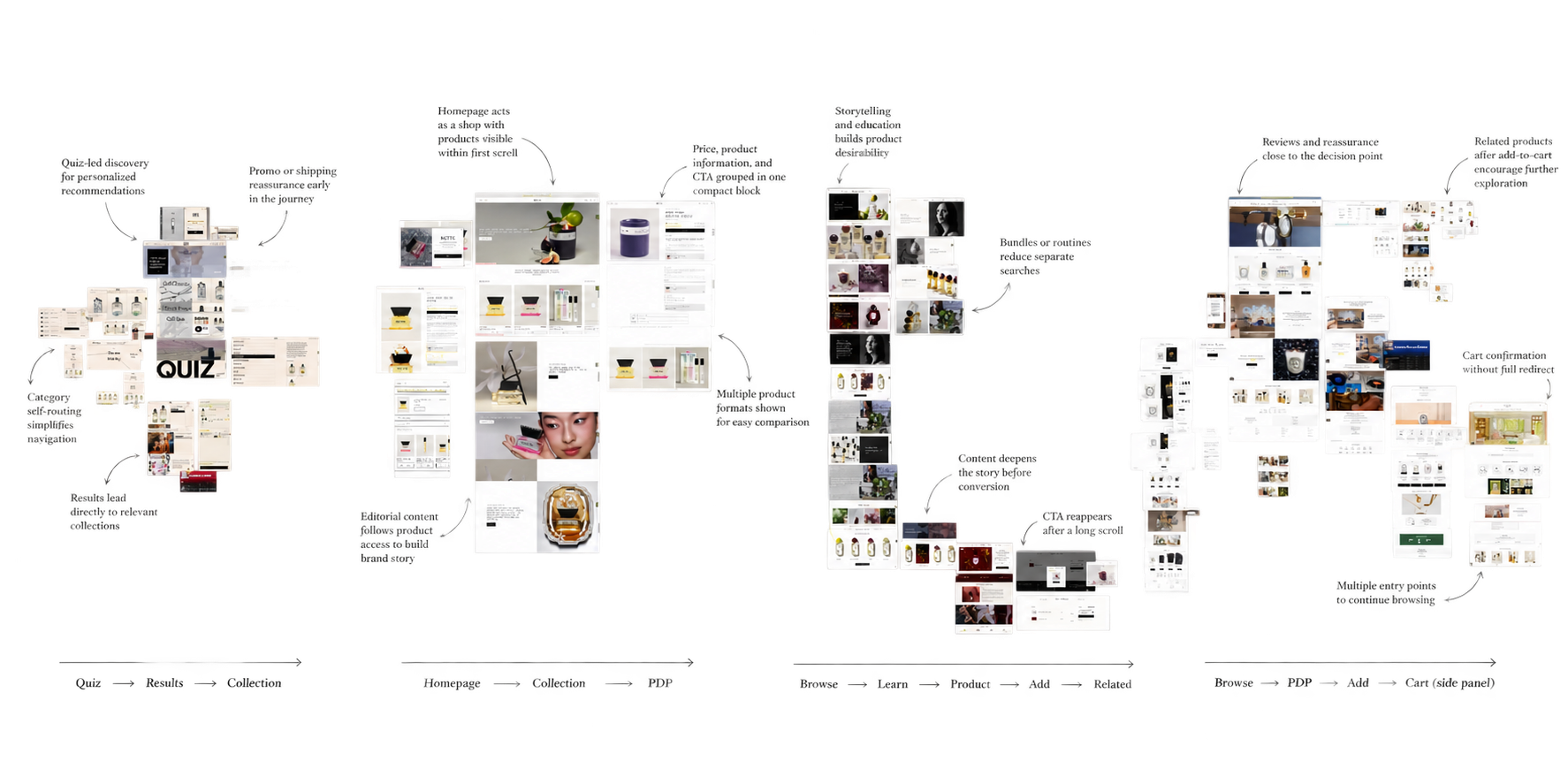
Paid acquisition was about to bring more people to a Shopify journey that was converting below target. Before increasing traffic, I mapped the route from product discovery through product page, cart and checkout and compared it with the strongest purchase paths in the benchmark.
On some key journeys, reaching the cart took around four interactions. We reduced the main paths to two by changing navigation, merchandising and product visibility. The editorial pages that carried the Maison Millais world remained, but they no longer sat unnecessarily between a customer who had decided what they wanted and the purchase itself.
Interactions on key product-to-cart paths
We did not run a controlled before-and-after conversion test, so I do not attach a sales uplift to these changes. The measurable improvement was simpler. We removed known friction before spending more to bring people into the store.
View the annotated website benchmark
A more personal way to discover the collection
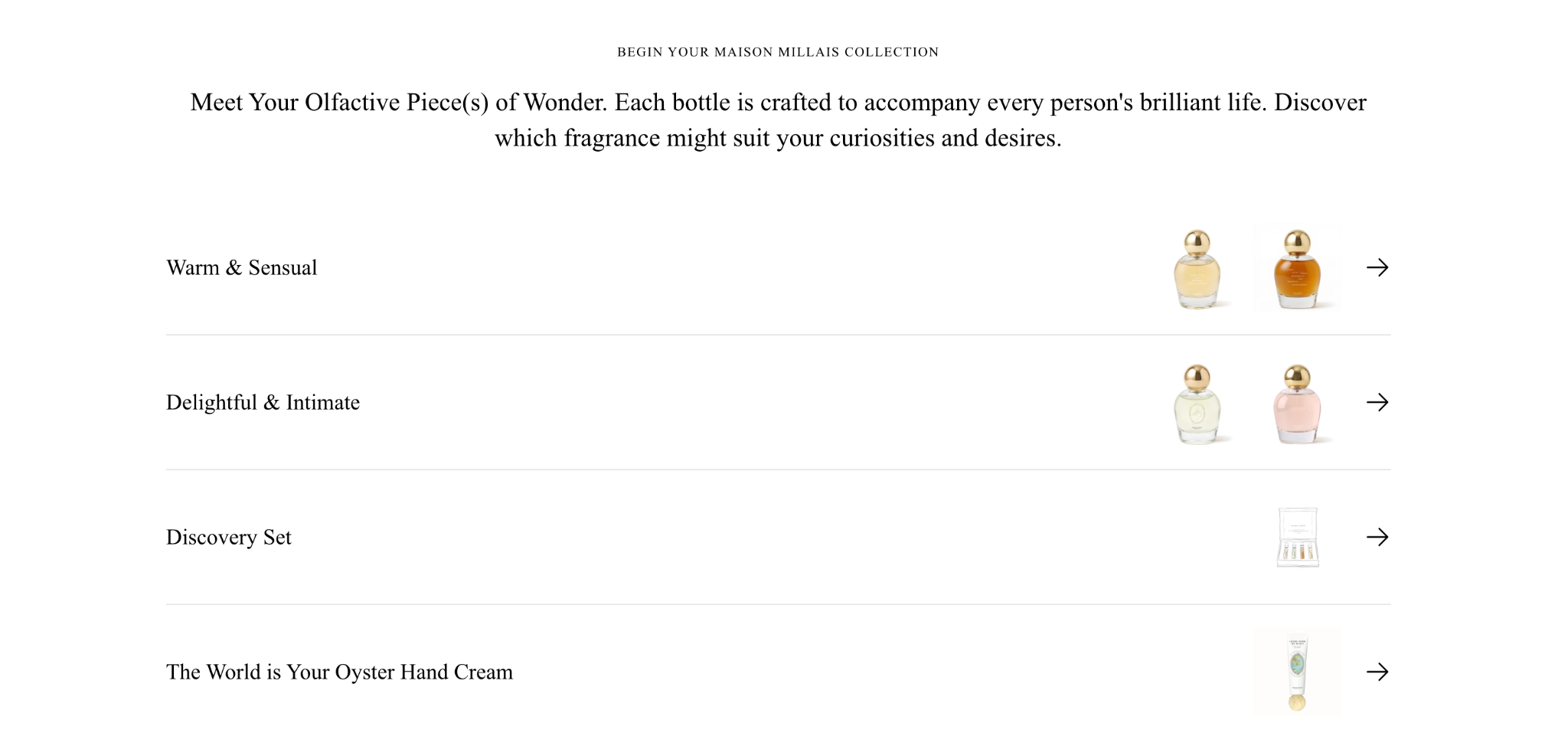
I also developed the fragrance discovery quiz for the Maison Millais website. It was designed to make exploring the collection more personal and participatory, encouraging visitors to engage with the site and feel more connected to the house before choosing a fragrance.
03Building demand before launch
Segment audiences, follow engagement and verify purchases before scaling.
With the new fragrances not yet available, acquisition had a different job. We needed to identify people interested enough in Maison Millais to come back when the collection launched.
I built the Shopify waitlist, organised and segmented the existing customer base and ran paid acquisition into a dedicated sign-up journey. Before launch, the campaigns had generated more than 200,000 impressions and over 2,000 tracked waitlist sign-ups, with link click-through above 3.5 percent and cost per lead in the low single-digit dollars. Video consistently outperformed static creative.
The waitlist then became a distinct CRM audience. Existing customers, new leads, preorder prospects and retargeting audiences had different levels of familiarity with the house and needed different communication.
Email behaviour gave us an early indication of what was creating interest. A direct sales email achieved a strong open rate but generated little subsequent action. Emails built around the story of Clementine & Edward Steal a Painting drew materially more clicks.
That mattered because the story was not only making the communication more engaging. It was helping move people further into the product.
Paid conversion required the same discipline. When Meta later reported materially more purchases than Shopify could verify, we stopped the campaign rather than scale spend against an attribution number we could not substantiate. Verified store sales became the reference point for deciding whether activity deserved further investment.
04Turning cultural positioning into participation
Sampling, storytelling and patronage reinforced one coherent launch idea.
Maison Millais had always drawn on art, literature and the humanities. The launch created an opportunity to turn those references into experiences people could participate in.
Love for Learning
Earlier in the year, Love for Learning invited undergraduate and graduate humanities students to share what they were studying, reading or researching. Selected participants received a bottle of Gods Wait to Delight in You. The campaign was intentionally small and put the house in direct contact with the students and readers whose world it was drawing from.
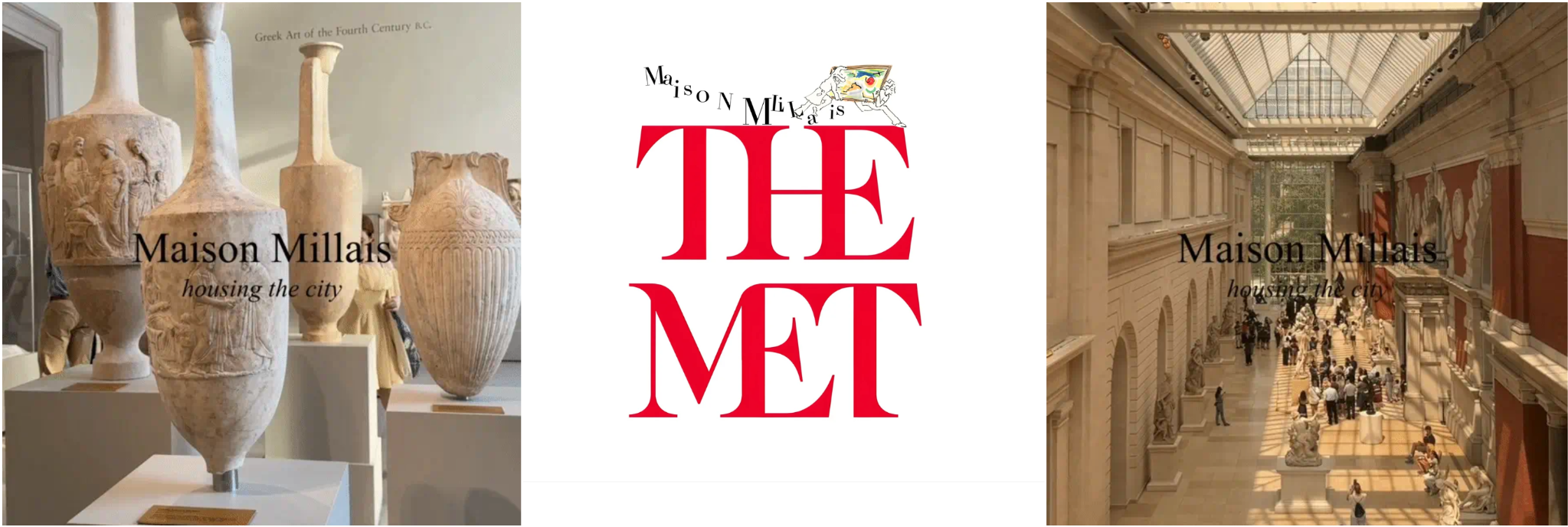
The Metropolitan Museum of Art
In New York, Maison Millais became a Corporate Patron of The Metropolitan Museum of Art. Through the partnership, the house supports the Museum’s exhibitions, educational programming, conservation and research. My role was in the communication and activation around the relationship.
 View larger
Find the Missing Painting
The launch of Clementine & Edward Steal a Painting then brought the cultural partnership and the commercial challenge of fragrance trial together.
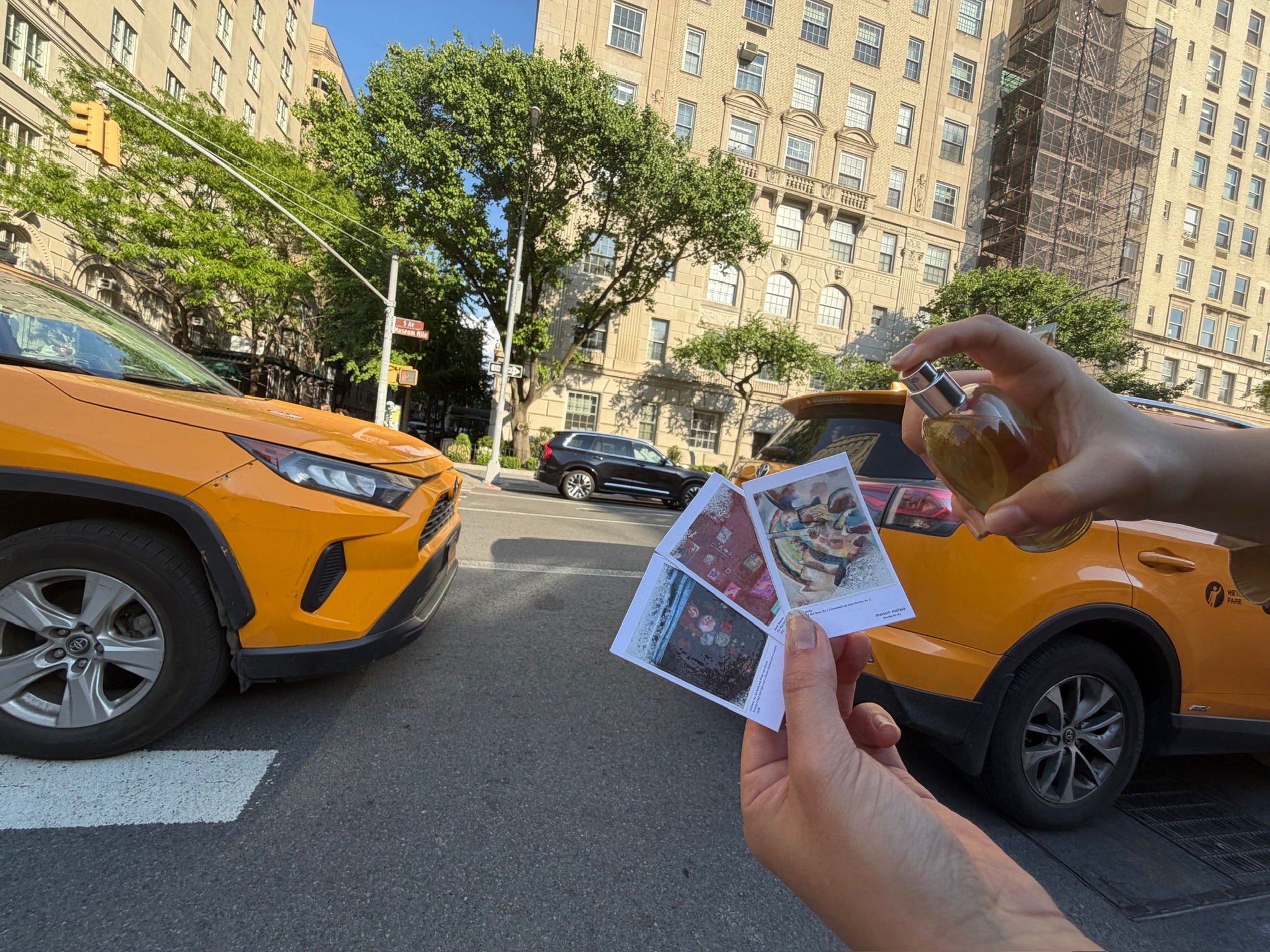
Customers received a fragrance sample with a painted blotter. Spraying the scent onto the card revealed a hidden image. One contained the missing painting, connecting the sampling experience with the story behind the fragrance and the private viewing held at The Met during launch week.
The mechanism gave the sample two jobs. It reduced the uncertainty of buying fragrance online and gave customers a reason to engage with the world around the product.
That made the activation stronger than a conventional art collaboration. The story, the product trial and the institutional partnership all reinforced the same idea.
05Launching in stages
Audience, operations and compliance determined the launch sequence.
The launch was built as a sequence rather than a single date.
The waitlist established an audience before the product was available. Preorder gave the most interested customers an earlier route in and allowed the Missing Painting activation to begin before the full release. June brought the US launch and the New York activity around it.
I worked across Shopify, customer data, paid media, communication, outreach, fulfilment and launch assets as each stage went live. I also researched gallery, pop-up and partnership opportunities in New York, taking forward the options that had a clear role in the launch and dropping those that did not justify their cost or time.
 View larger
Preparing the next markets
The next markets were being prepared in parallel. For the EU and UK, I supported work with Biorius on the safety assessment, product information file, label and claims review, notifications and Responsible Person requirements. I also researched US requirements and the feasibility of preparing additional markets at the same time.
That work made expansion a sequencing decision rather than simply a demand decision. A market could be attractive and still not be ready to open. Product compliance, operating requirements and launch timing had to line up before commercial activity could follow.
06By launch
The launch connected trial, demand and a clearer purchase journey.
By June, Maison Millais had built a tracked waitlist of more than 2,000 people, shortened its key product-to-cart journeys, established a clearer role for sampling, segmented its customer communication and launched a cultural activation connected directly to both the new fragrance and The Met patronage.
The work also gave us a clearer view of what deserved further investment. Video was the strongest paid format we had tested. Story-led CRM generated stronger engagement than direct product messaging. Some physical partnership opportunities were not worth pursuing. Paid activity was stopped when purchase attribution could not be verified. EU and UK market preparation was underway for the next stage of expansion.
The $150 bottle was only one part of the launch. The work around it had to give people a lower-risk way to discover the fragrances, a reason to care before they were available and a clear route from that interest to purchase.